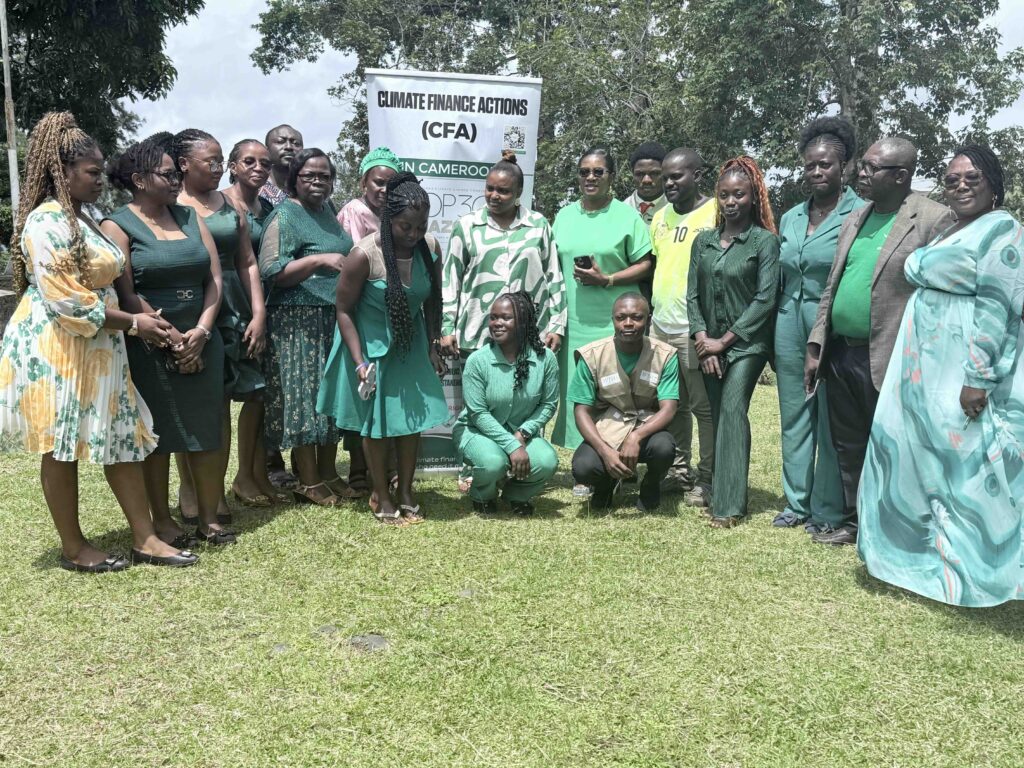
In June 2025, twenty-two members of the Climate Finance Action (CFA) working group in Cameroon, held its first in-person meeting in Buea, Cameroon. This in-person meeting came after almost 4 virtual meetings held every first Friday of the month at 12 noon since January 2025. A one year initiative co-lead by Women for a Change (Wfac), with support from World Resource Initiative (WRI) under the Green Accountability Fund. The initiative runs from January to December 2025. Members of the working groups represent diverse backgrounds, ranging from environmental rights defenders, indigenous rights leaders, adolescents, young women and media practitioners, agriculturists, academia, health professionals, trade unionists, students, researchers, community financial institutions, feminist leaders and civil society leaders, public and private sectors.
Institutional Members of the CFA working group in Cameroon are: African Humanitarian Development & Peace Organization (AHDPO); Ajemalebu Self Health (AJESH), BRIDGES, Creative Artists for Nature & Sustainable Development (CANSUD), Cameroon Women’s Convention for Peace, Committee of Women Workers (COFEM), Environmental Protection & Development Association (EPDA), Haneptracopay, GenEgaliteECCAS, MIFALI, Solidarity Health Foundation (SHF), Women for a Change (Wfac).
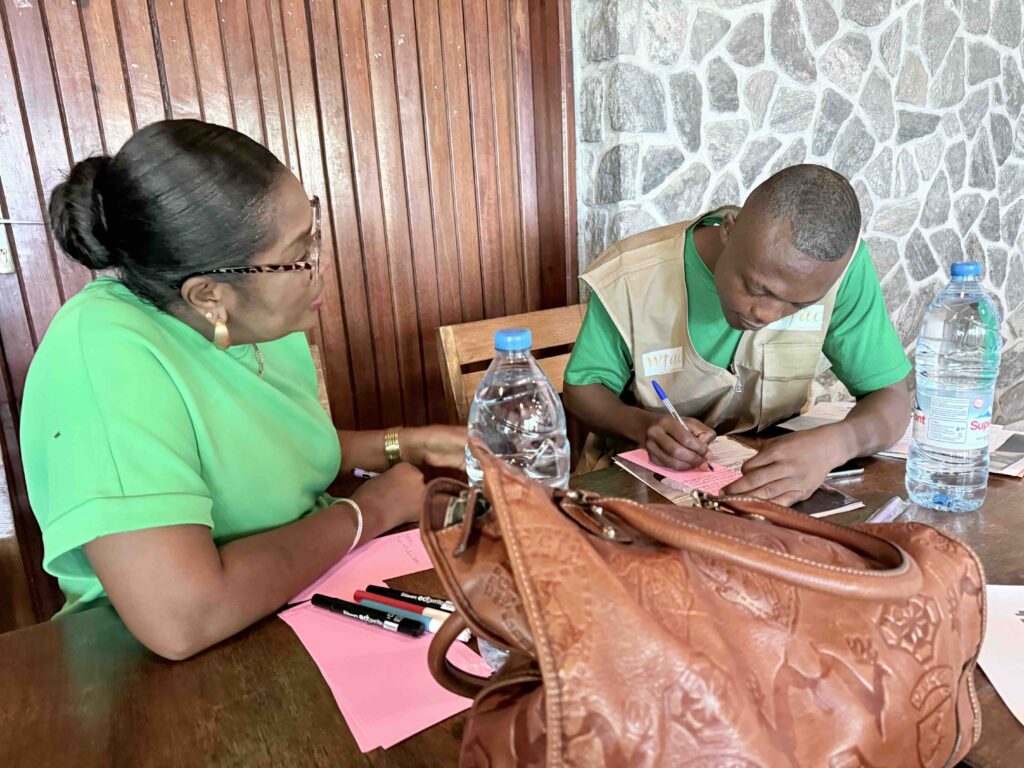
The one-day workshop seminar served as a space for inclusive dialogue and critical discussions around key issues and strategies to monitor and assess the state of climate finance within the context of agriculture and food security, SRHR (WASH) and gender equality in Cameroon; strengthen capacities around gender responsive climate finance and budgeting for the implementation, monitoring and reporting of NAPs, GAPs and NDGs. A key outcome from the event was the review of the draft Climate finance manual, outlines of the policy briefs and research on climate finance and WASH services and actions in Cameroon.
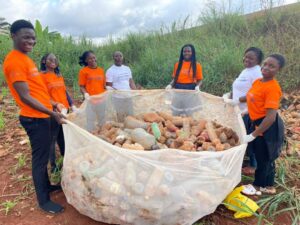
Climate finance actions in Cameroon vary across sectors and constituencies. Some of the local actions are garbage picking, sorting and transformation, plastic recycling, reuse and management including waste and smart agricultural practices etc. Yet, discussions around climate finance mechanisms and subjects remain highly technical and complex. It is in this light that the CFA working group was established. The working group believes that sustainable climate finance actions in Cameroon will go a long long way to help the country adapt and mitigate the adverse effects of climate change, which accounts to over 130 million USD loss in economic value annually. With an estimated GDP loss of between 4-10% by 2050. Combating climate change cannot be efficient if sustainable, flexible and long term climate finance is allocated. Yet, access to, understanding of, and effective use of climate finance mechanisms remain limited among key stakeholders in the country.
With increasing vulnerability to climate risks, including floods, droughts, and pollution, Cameroon must strengthen its frameworks, engage stakeholders, and improve communication and accountability around climate finance initiatives. Cameroon has made commitments under the United Nations Framework Convention on Climate Change (UNFCCC), including the submission of its Nationally Determined Contributions (NDCs), yet gaps persist in coordination, legal frameworks, public awareness, and the inclusion of vulnerable groups, especially in rural and informal sectors.
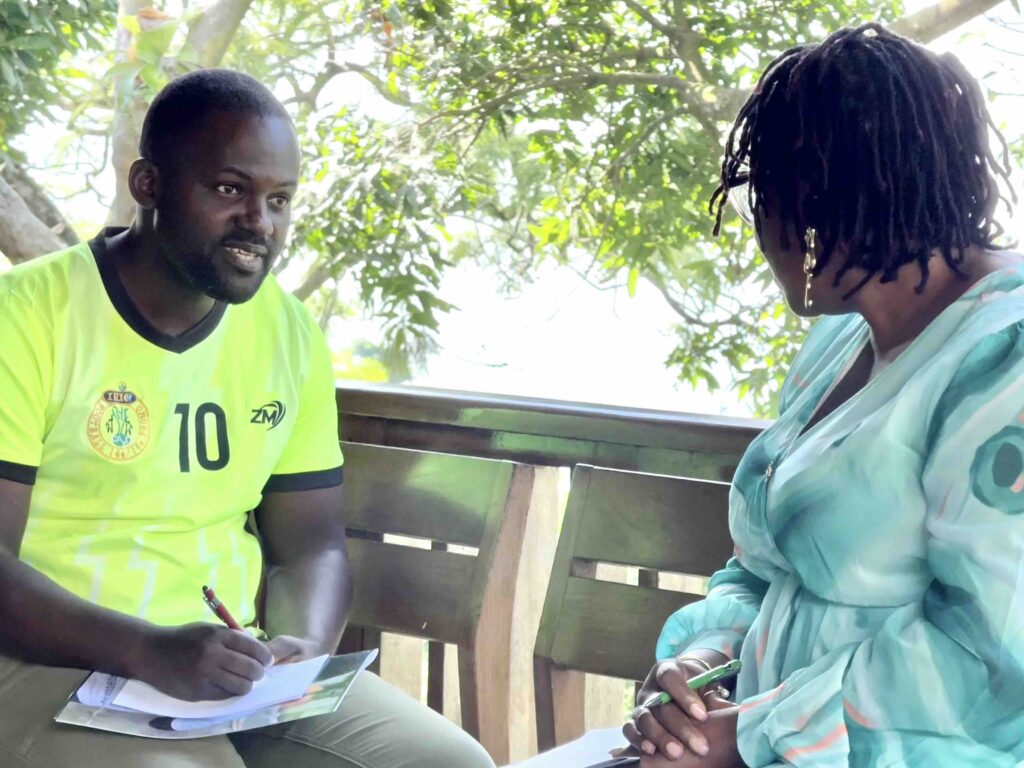
Through the green accountability model, the CFA working group is able to meaningfully engage communities, individuals including women and girls most affected by the climate crisis into climate debates and negotiations at all levels, from local to global. As purported by a participant in her remarks when asked to envision her community where climate finance actions is accessible, transparent, and inclusive, she said:
When the air burns,
The bullets scatters left and right
The rain don’t come
Everyday I wonder around
Some would feel it is just to hide
But it is to find clean water, food, shelter, safety
Clean water for my family, to drink, bath and for my menstrual health.
I want a future where policies breathe with my truth
“Where climate finance funds not just solar panels but menstrual dignity actions, because menstrual justice is climate justice…. ” Ngimou Victorine
According to Sindy Njongou, “the Future is Green; where nature thrives, communities flourish, and climate justice guides all step humans take. The future is one that reminds us all that through unity, resilience, and bold actions, we can create a world rooted in harmony and green prosperity for generations to come”